
Products
Current products
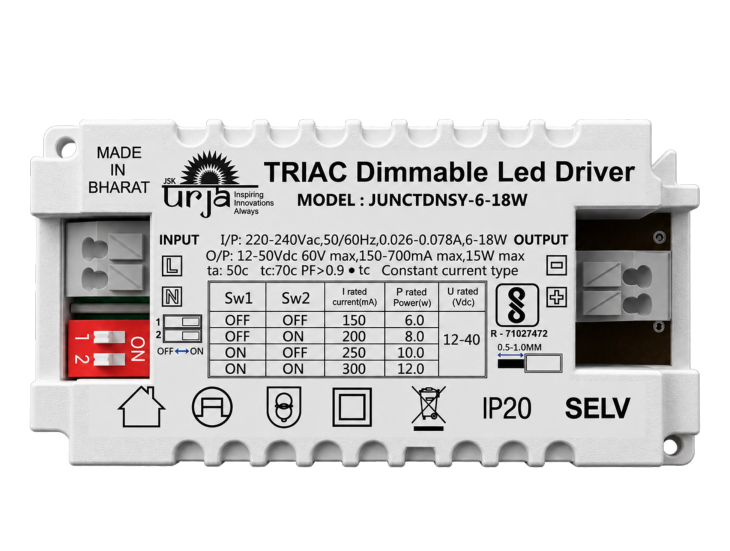
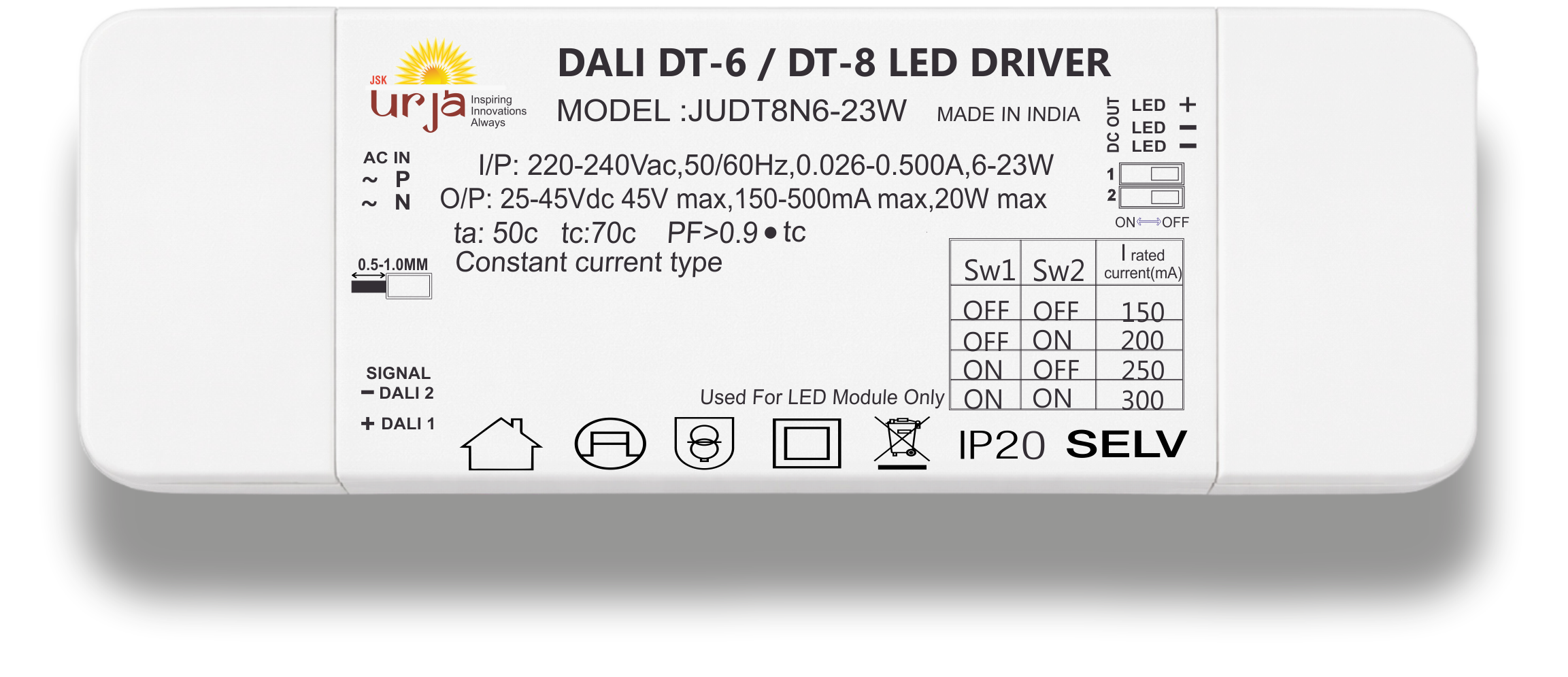
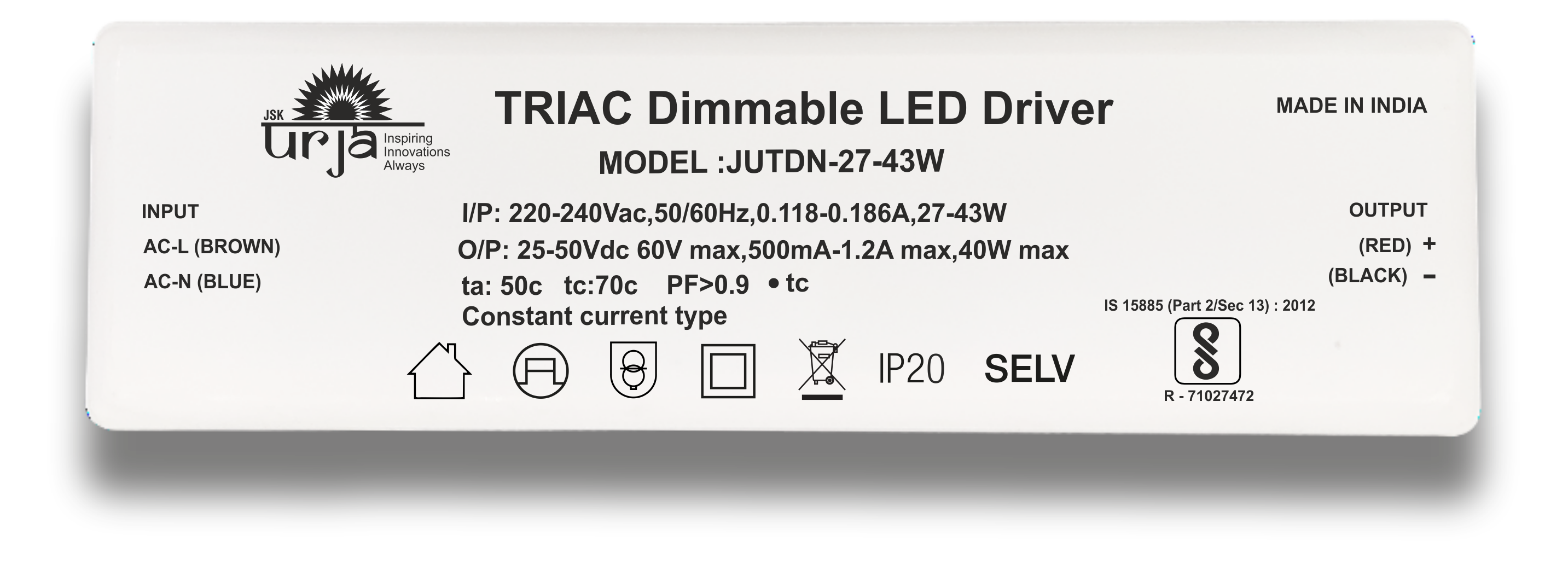
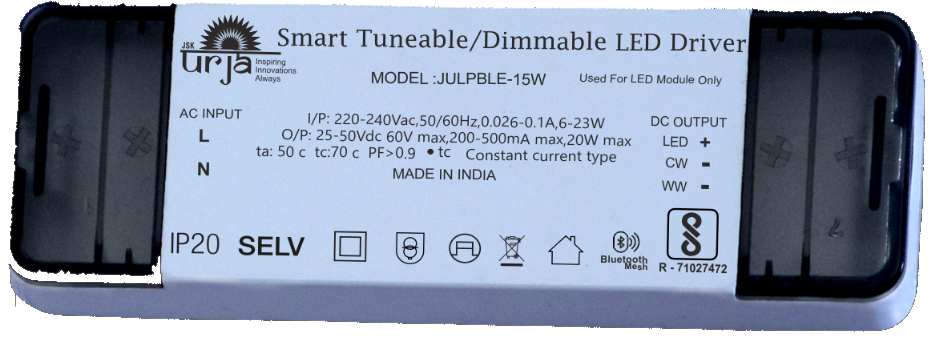
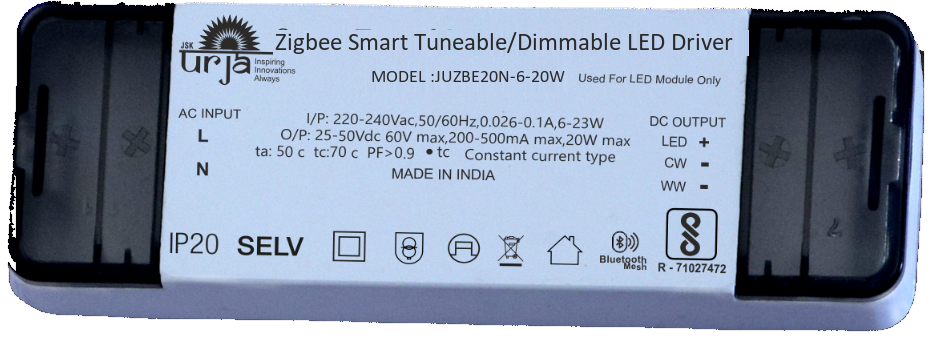
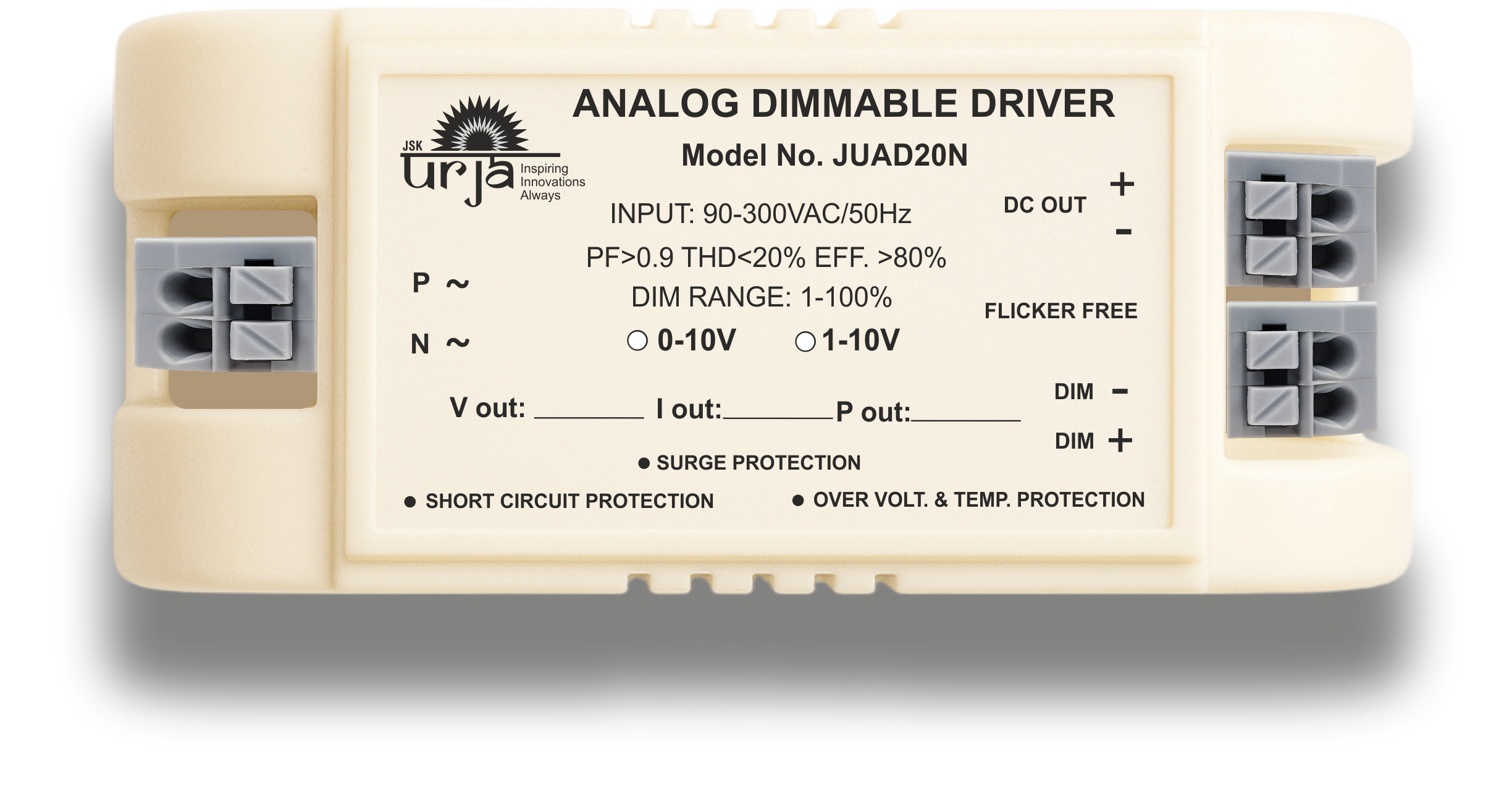
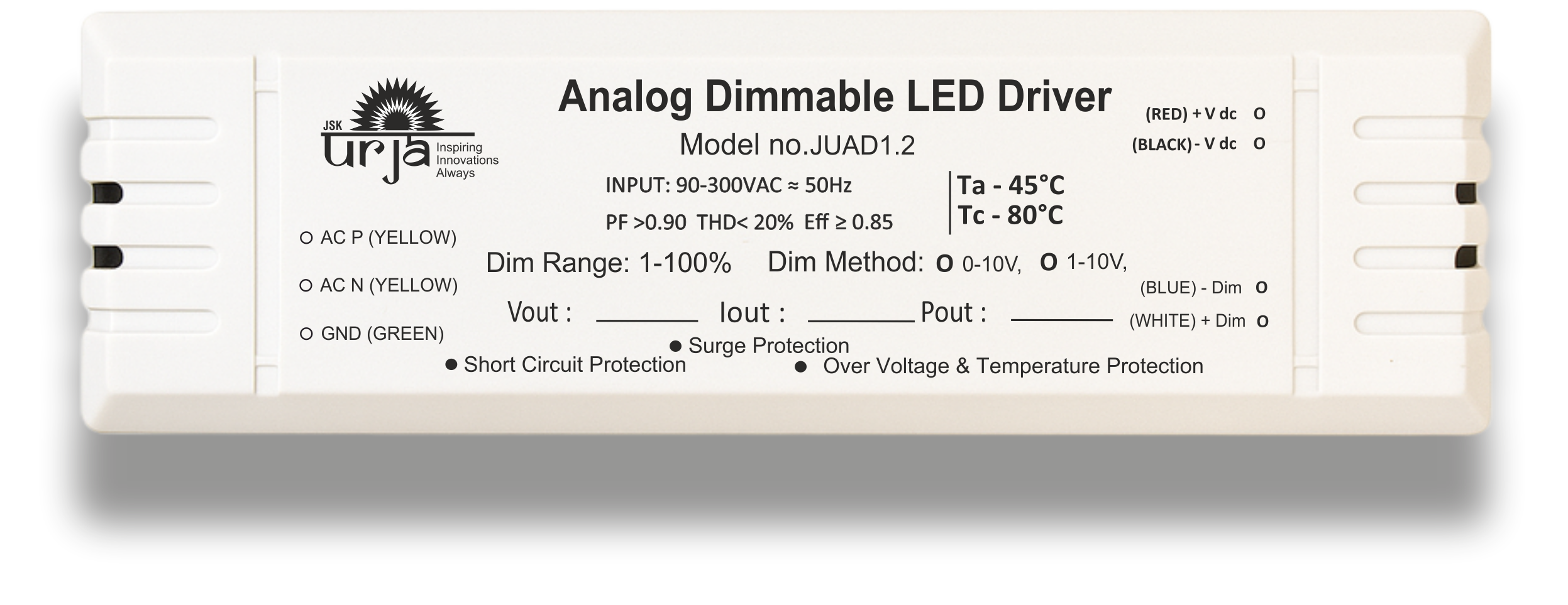
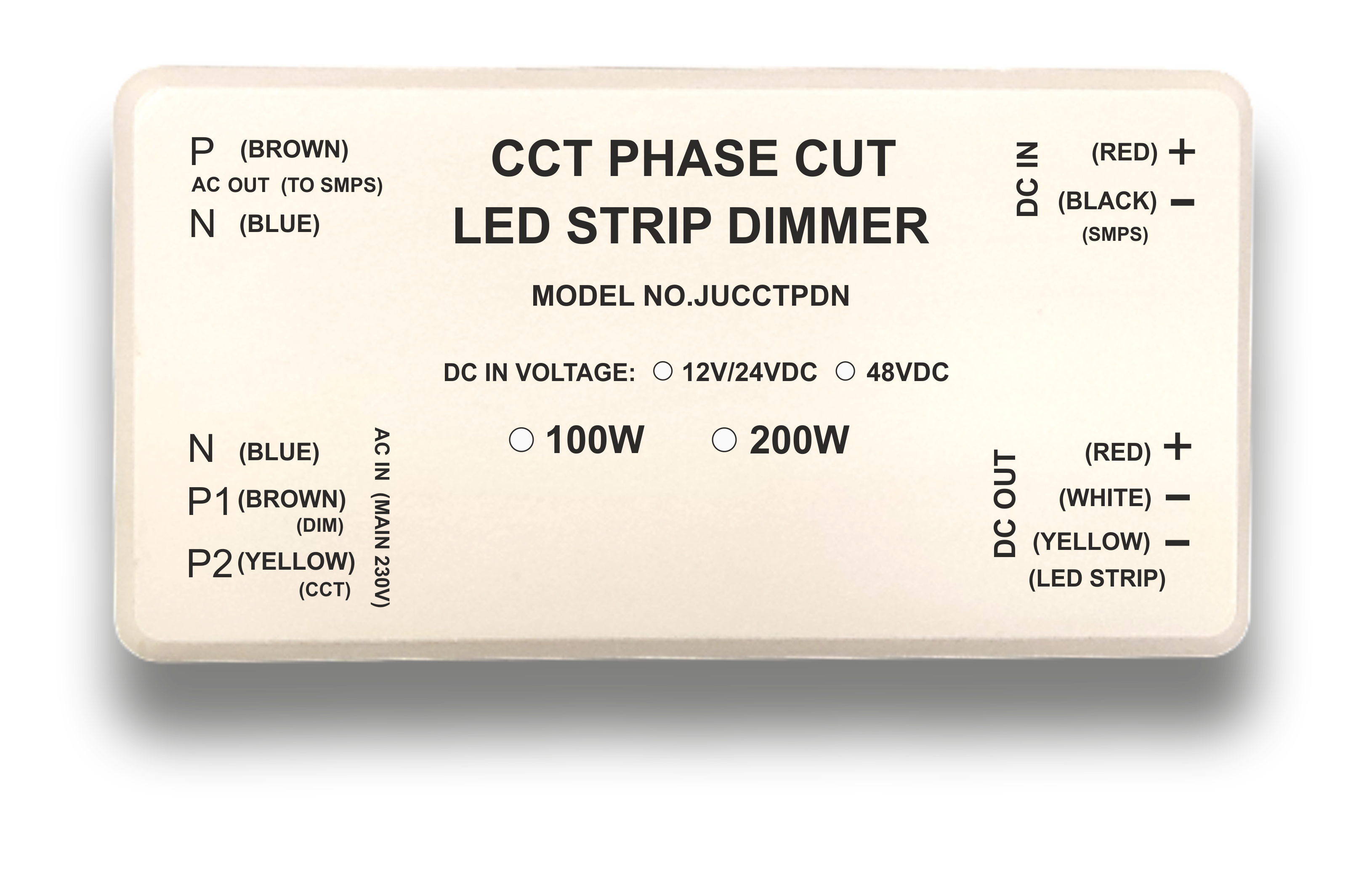
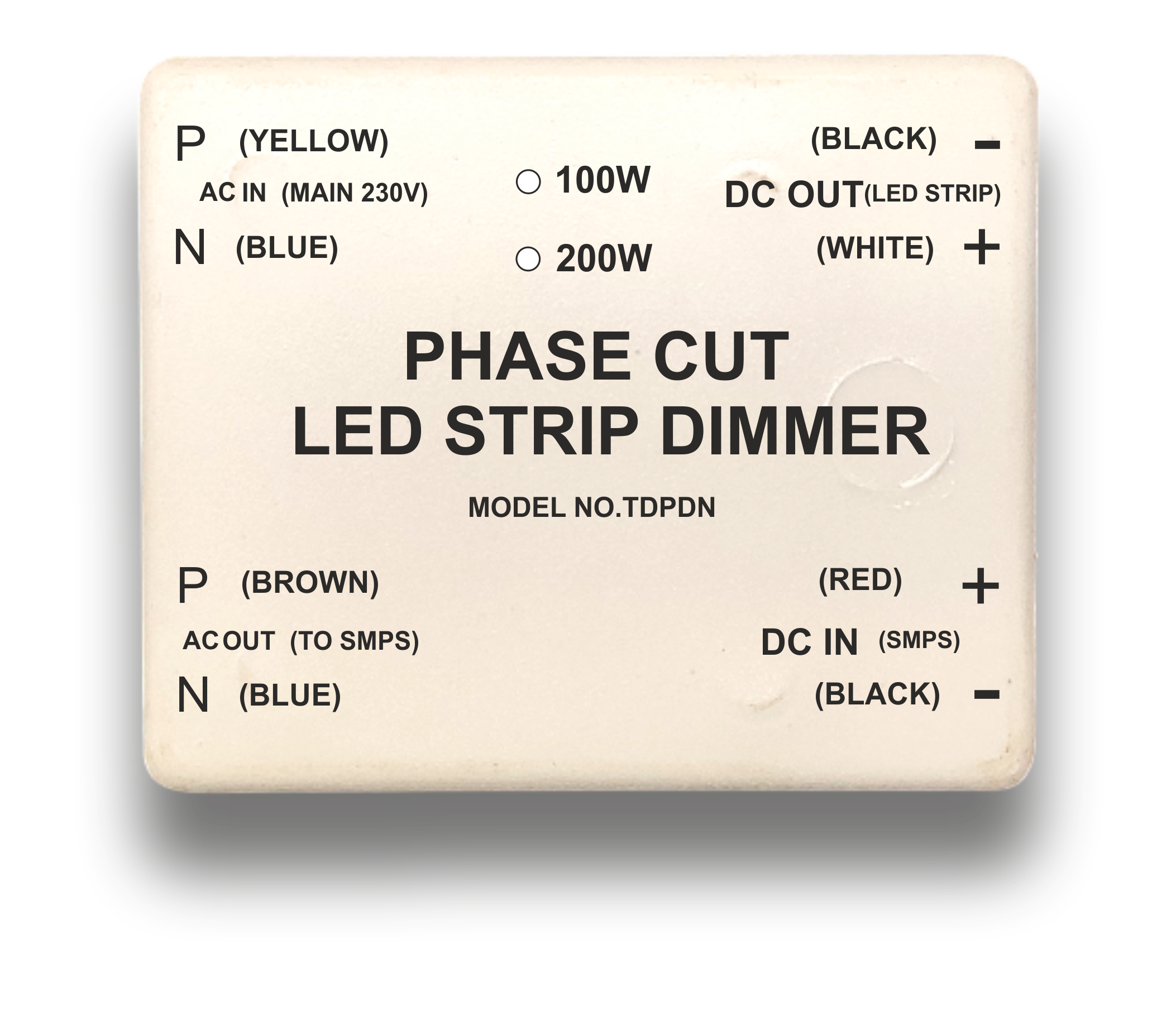
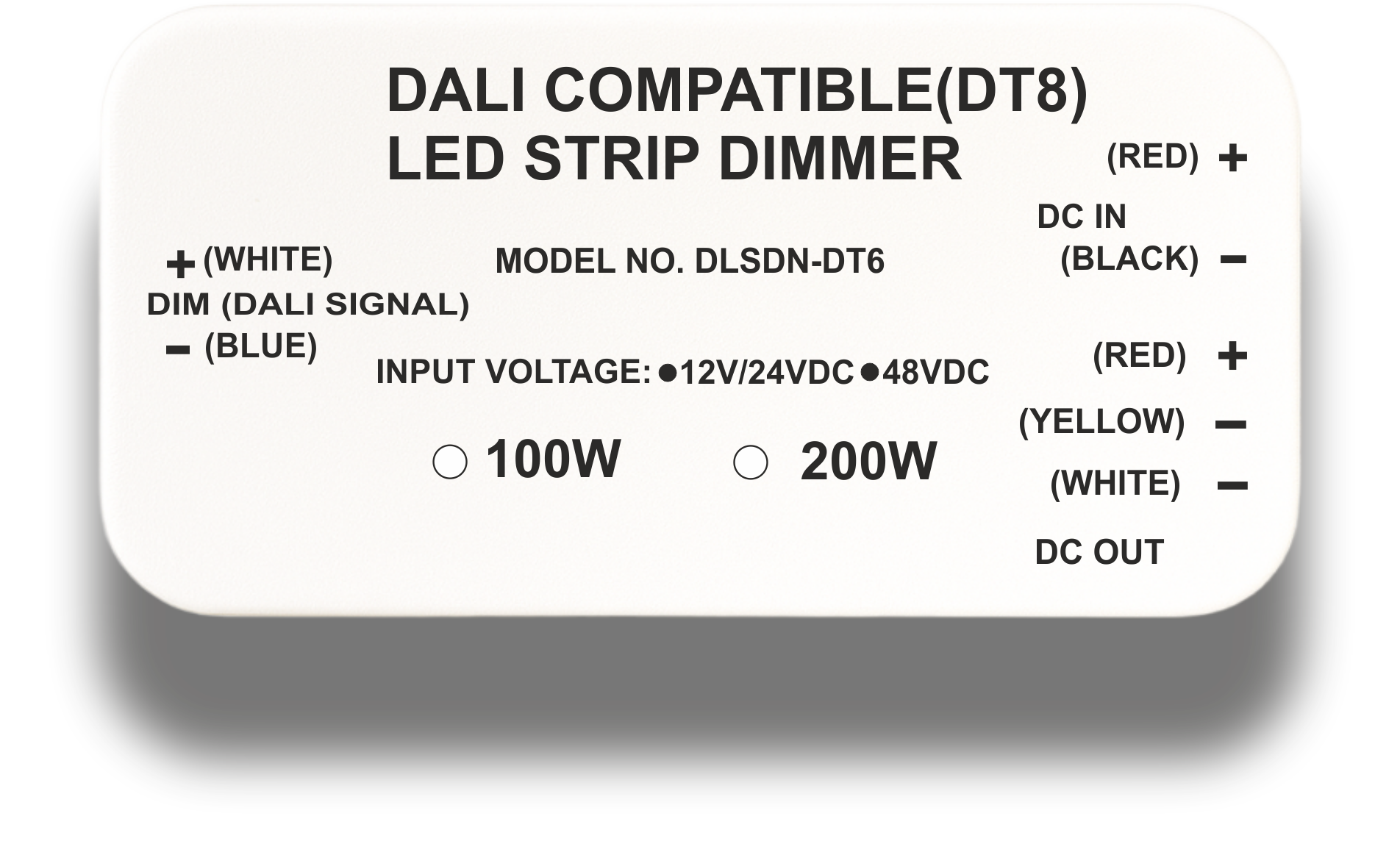
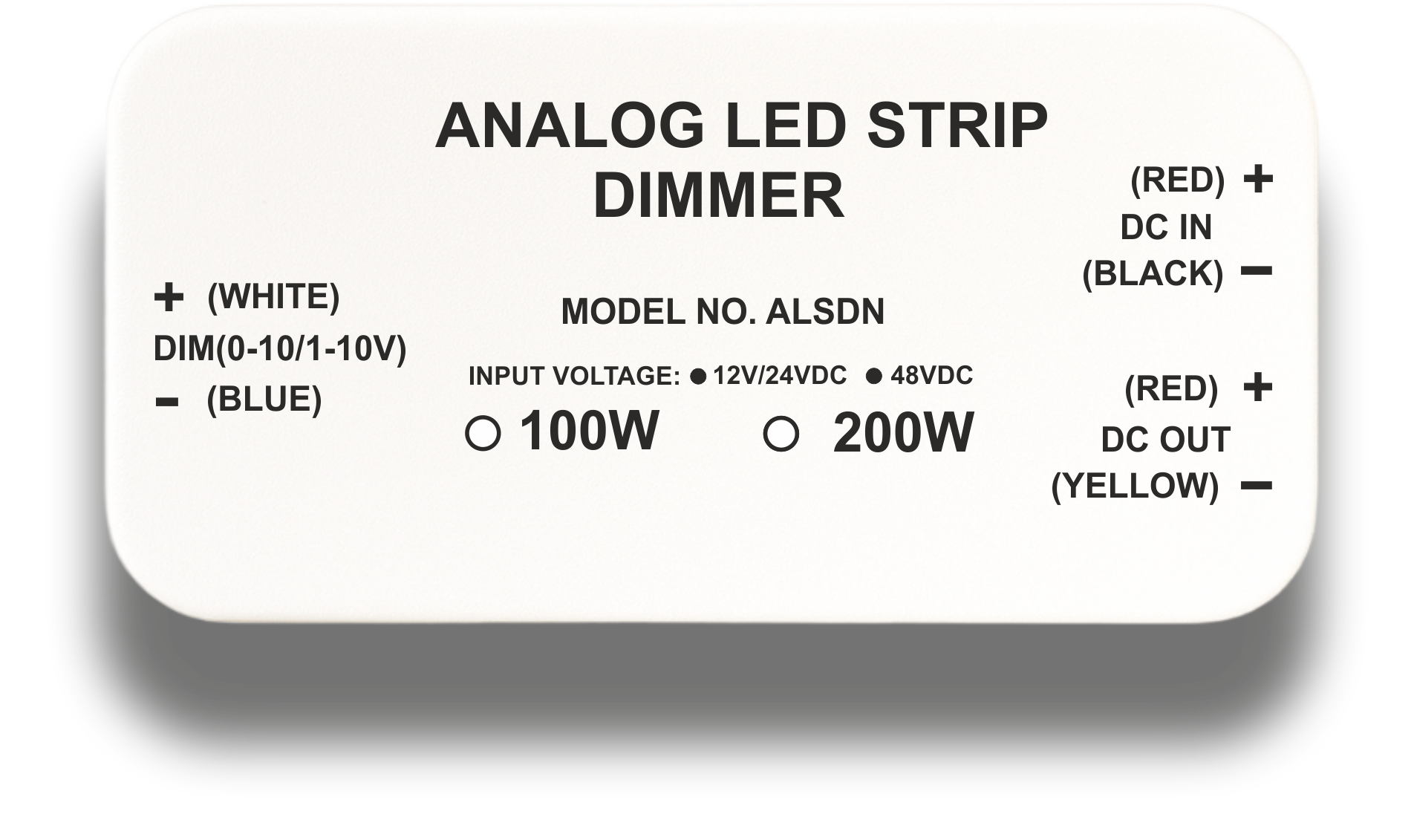
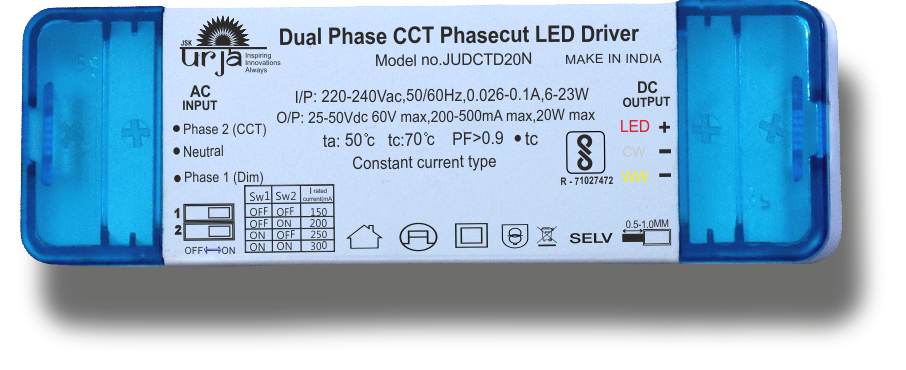
No public product is listed in this category yet. View the category page for educational information, or contact JSK URJA.
View categoryTechnical Documents
Dual Colour Phase Cut CCT Dimmable Driver
Model JUDCTDN-6-23W
Educational overview
Smart Lighting & Dimming Technologies
Understanding the Technologies Behind Intelligent Lighting Control
Lighting control is the method used to set intensity, appearance and behaviour. The notes below explain four widely used approaches in general terms. They are not product specifications, compatibility statements or certification claims.
01 / Technology
Phase Cut Dimming
Phase-cut dimming controls light output by changing how much of each AC mains half-cycle is delivered to the lighting load.
How it works
The AC supply is a repeating sine wave. A phase-cut dimmer turns the load on or off at a chosen point in each half-cycle, which reduces the average power available to the luminaire.
Leading-edge, or forward-phase, dimming delays turn-on after the zero crossing and then conducts for the remainder of the half-cycle. It has long been associated with simple TRIAC-style wall dimmers.
Trailing-edge, or reverse-phase, dimming conducts from the start of the half-cycle and turns off before the next zero crossing. This method is often used with electronic lighting loads because the switching edge can be shaped more gently.
General benefits
- Uses the existing mains conductors between a dimmer and the load, so additional control wiring is not required.
- Is widely understood in retrofit work where a wall dimmer already exists.
- Can cover a useful brightness range when the dimmer and the load electronics are selected to work on the same phase-cut method.
Typical applications
- Residential rooms with wall dimmers
- Hospitality guest spaces
- Retail and restaurant retrofit lighting
- Downlight and decorative circuits on mains dimmers
02 / Technology
DALI Lighting Control
DALI, the Digital Addressable Lighting Interface, is a two-way digital bus used to command and query lighting devices over a dedicated control pair.
How it works
Devices share a common digital line. Commands can be sent to a single address, to a group, or as a broadcast to every device on that line.
Addressing lets each control gear or input device be identified separately. Installers can then change which luminaires respond together without rewiring the power circuit.
Groups collect devices that should move together. Scenes store target levels so a space can recall a prepared lighting state with one command.
Because the bus is bidirectional, a controller can ask a device for its current level or status instead of assuming that a command was received.
General benefits
- Individual luminaires can be adjusted without dedicating a separate power circuit to each one.
- Grouping and scene recall support day-to-day operation of offices, meeting rooms and architectural spaces.
- Status feedback helps commissioning and later maintenance.
Typical applications
- Commercial offices and meeting rooms
- Architectural façades and feature lighting
- Education and civic buildings
- Campus or multi-zone lighting systems
DALI DT6, DALI DT8 and DALI-2
DT6 is commonly used for single-channel brightness. DT8 is commonly used for colour-control functions such as tunable white. DALI-2 is a certification programme. This page explains those terms. It does not list a JSK URJA DALI product and does not claim DALI-2 certification.
A DALI-compatible LED driver is designed to work with a compatible DALI system. That is not the same as DALI-2 certification, and JSK URJA does not use the DALI-2 logo.
Read the DALI-compatible LED drivers page for the India manufacturer enquiry path, or compare tunable white and phase-cut control.
03 / Technology
Tunable White & CCT Control
Tunable-white systems change both intensity and correlated colour temperature, moving light between warmer and cooler white appearance.
How it works
Correlated colour temperature, or CCT, describes how warm or cool a white light appears. It is expressed in kelvin. Lower values look warmer; higher values look cooler or more like daylight.
A common method mixes a warm-white LED channel with a cool-white channel. Changing the ratio shifts CCT; changing the combined output shifts brightness.
Some digital control systems treat intensity and colour temperature as separate axes, so a space can hold one CCT while dimming, or change appearance at a fixed level.
General benefits
- Lighting appearance can follow the use of a room: warmer for rest and hospitality, cooler for task-oriented work.
- One luminaire family can serve several visual moods without changing lamps.
- Designers can align lighting with time of day or programmed scenes while remaining within the white-light range.
Typical applications
- Hotels, restaurants and guest circulation
- Offices and meeting rooms
- Residential living and wellness spaces
- Galleries and feature interiors
04 / Technology
Smart Lighting & Automation
Smart lighting treats luminaires as part of a wider control system that can respond to people, time, sensors and building or home automation.
How it works
A lighting system may combine drivers or controllers, occupancy or daylight sensors, user interfaces and a supervisor such as a gateway or automation processor.
Control can be local, such as a scene plate in a room, or supervisory, such as a schedule or a building system that sends set-points to many zones.
Wired digital buses and wireless networks are both used to carry commands. The chosen method depends on the building, the retrofit constraints and the required integration.
Automation logic typically includes occupancy, time schedules, daylight response and recalled scenes. Lighting then becomes one service among others in the same project.
General benefits
- Spaces can reduce unused lighting when they are empty or already daylit.
- Central supervision simplifies operation of larger sites.
- The same hardware can serve manual override and automatic behaviour.
Typical applications
- Homes and apartments with scene or app control
- Hotels and serviced residences
- Commercial floors and common areas
- Building-management and campus projects
Scope
How to use this page
This page is an educational technology overview. Model names, electrical ratings, protocol versions and approvals belong on the relevant product or manufacturer pages and are not implied here.
Technical questions
Frequently asked questions
Leading-edge vs trailing-edge?
Leading-edge (forward-phase, often TRIAC) delays turn-on after the zero crossing. Trailing-edge (reverse-phase) turns off before the next zero crossing. Published JSK URJA phase-cut drivers list both; the installed dimmer must still be checked.
1% vs 0% vs dim-to-off?
Published JSK URJA drivers specify 1–100%. This site does not claim 0% dimming or dim-to-off.
Why do LED lights flicker on a dimmer?
LED flicker can come from the mains supply, the dimmer method, the driver design, the LED load, or a mismatch between those parts. Phase-cut dimmers, analog 0–10V / 1–10V controls and digital systems each stress the driver differently. A compatible driver and dimmer combination reduces visible flicker; an incompatible pair can make it worse. On published JSK URJA pages, “flicker-free” is the approved datasheet wording. It is not an independently verified IEEE 1789, PstLM or SVM measurement. Those laboratory figures are not published here.
Does flicker-free mean a lab certificate?
No. On published JSK URJA pages it is the approved datasheet wording. IEEE 1789, PstLM or SVM figures are not published here.
Phase-cut vs 0–10V vs DALI?
Phase-cut uses the mains waveform. 0–10V / 1–10V is analog control wiring. DALI is a digital bus. Choose by the control system, not by a generic “best” claim.
What is DALI-2?
DALI-2 is a later certification programme for the DALI protocol. This page explains the term so that buyers can distinguish a certified product from a compatible product. JSK URJA does not claim DALI-2 certification on this website.
What is DALI DT6 versus DT8?
DALI DT6 generally refers to single-channel LED intensity control. DALI DT8 generally refers to colour-control device types, which can include tunable white. JSK URJA discusses both as technology topics. No DALI DT6 or DT8 model is published for sale here until it is approved.
Does DALI-compatible mean DALI-2 certified?
No. DALI-compatible means a driver is designed to work with a compatible DALI control system. DALI-2 certification is a separate, product-specific listing. JSK URJA does not claim DALI-2 certification and does not use the DALI-2 logo.
Constant current vs constant voltage?
The two published drivers, JUDCTDN-6-23W and JUNCTD15N5Y, are constant-current LED drivers. A constant-voltage LED strip dimmer is a different product type: it controls 12 V or 24 V LED tape and usually needs an appropriate external power supply. JUDCTDN-6-23W is not a strip dimmer. No constant-voltage strip dimmer is published as a current public product.
Is PWM the dimming method of the published drivers?
No. Published models use phase-cut. PWM is described here only as a general lighting method.